Welcome to The Tamizdat Review, an online quarterly dedicated to literature in exile, with a focus on contemporary Russophone writing and exterritorial publishing!
Launching a new magazine means understanding its reach and defining its scope. Since 2022, numerous authors who write in Russian have emigrated after speaking out against Russia’s full-scale invasion of Ukraine. Others left even earlier, since 2014. This has inevitably affected not only the themes of their writing but also the ways in which their works circulate. For several years now, the new tamizdat has been seen as a direct continuation of the pre-1991 tamizdat tradition. There are, however, crucial differences that make the current situation more ambiguous than its historical counterpart. First of all, the new tamizdat is still in the process of formation: new projects appear and disappear, cultural figures known by their long and successful lives in Russia keep reinventing themselves abroad, new voices emerge and seek recognition.
Then, as there is no impenetrable border between Russia and the rest of the world, we can still speak of a cultural space that, despite deep fractures, remains coherent. Many authors living abroad continue to publish in Russia, and, conversely, the new tamizdat features titles by those who have stayed behind—authors whose voices deserve to be heard elsewhere as they are silenced at home.
The Tamizdat Review is conceived of as a venue for discussing what happens in these works, what debates they spark, and how connections are either maintained or broken within a literary field that encompasses Russia, the literary diaspora, and Russophone writing from other countries.
We see our project as a journal of criticism, or, rather, kritika. Kritika is not the same as cultural journalism or academic literary scholarship. In the Russophone tradition—and other Slavic cultures as well—kritika is a hybrid genre that uses artistic methods to analyze works of art. Typically, these methods are literary, but one could also imagine other forms of kritika, such as those based upon the languages of video, stand-up comedy, or even theater.
The Tamizdat Review grew out of conversations among Slavic scholars, some long established at universities across the U.S. and Europe, and others newly arrived. At a certain point, we realized that a critical discussion of new tamizdat deserves a place outside the boundaries of strictly academic discourse: our journal is for academics who act as literary critics, essayists, or simply readers engaged with this peculiar new literary situation.
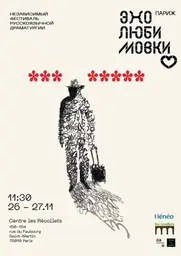
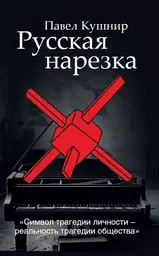
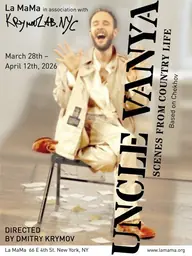
Our inaugural issue features texts by Kathleen Mitchell-Fox, who takes on experiments with AI music by contemporary poets writing in Russian and Tatar; Maria Malinovskaya, who analyzes the style of Pavel Kushnir, a musician, avant-garde writer, and anti-war activist who died in a Russian prison while on hunger strike; and Natalia Skorokhod, who offers an extensive survey of Russophone drama written and staged since 2022. Dana Fishman reflects on Dmitry Krymov’s recent theatrical rendition of Uncle Vanya, Tatiana Krasilnikova reviews a collection of poetry by Liza Kheresh, and Anna-Maria Guschina reports from one of the two major new tamizdat book fairs, the Prague Book Tower.
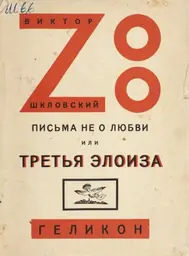
Each issue will feature short book reviews, with an effort to cover the most significant new tamizdat releases. We plan to publish interviews, surveys, scholarly conversations, and profiles of those involved in today’s tamizdat: writers, editors, and, of course, publishers. Likewise, we are interested in the history of tamizdat and exile (in this issue, we are running a discussion of Viktor Shklovsky’s correspondence with Elsa Triolet). We are also interested in reflections that go beyond aesthetics: each issue will include essays addressing a question that that those who have emigrated after 2022 cannot help but ask: “Why are we here?” In this issue, writer Mikhail Kaluzhsky and journalist Elena Kostyuchenko ponder this question. Finally, there is a section with games for those who would like to test their knowledge of tamizdat and contemporary literature in exile.
The Tamizdat Review is published in English and Russian (translations may appear after the original text is first published in a current issue). We welcome original contributions from authors who write on new tamizdat, exile, and cultural displacement. Please send us your ideas! We are particularly interested in articles and reviews of newly published books, as well as comprehensive surveys of emerging phenomena—in any media, from traditional ones (literature, cinema, theatre) to new ones (digital and ludic). We look forward to hearing from you!