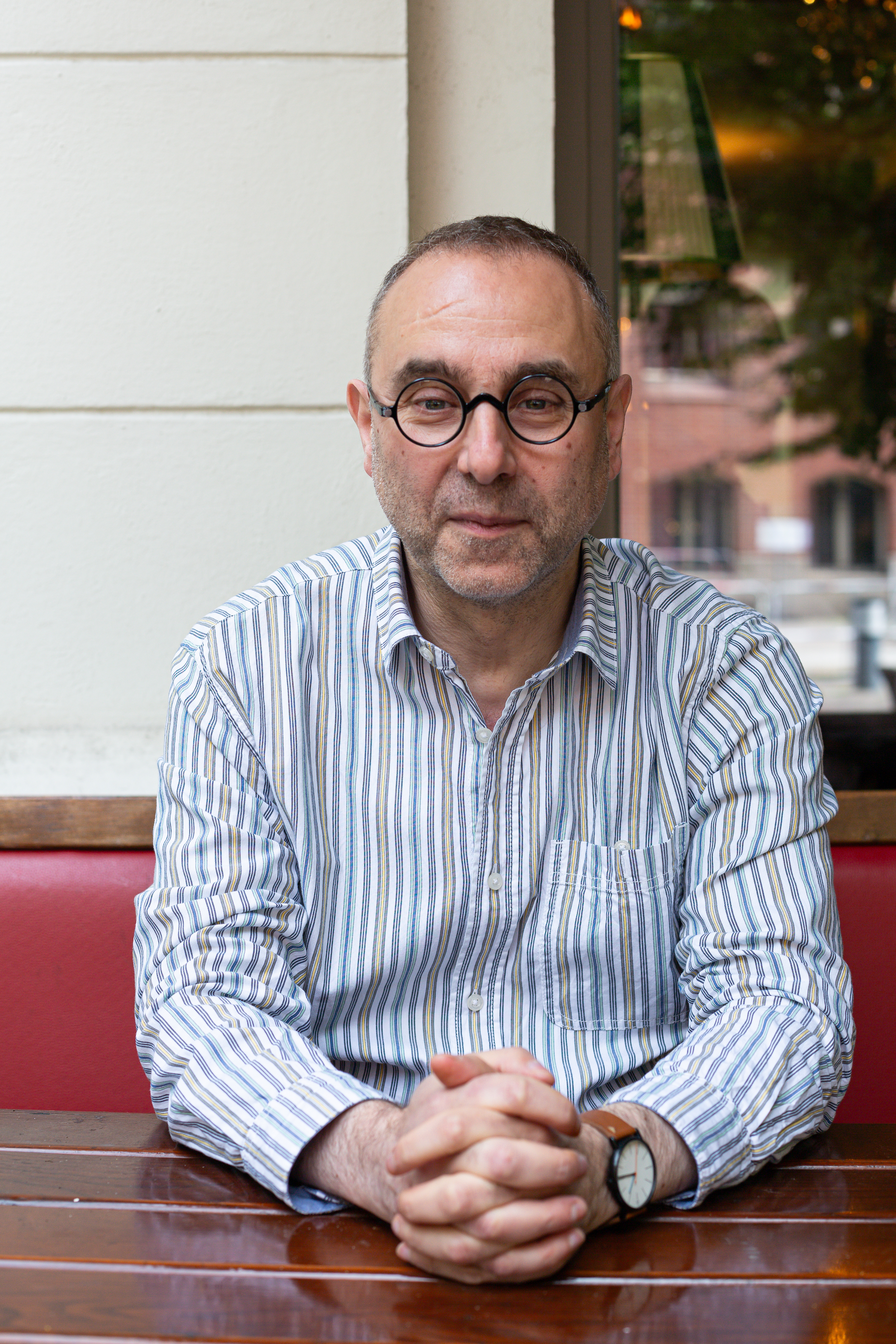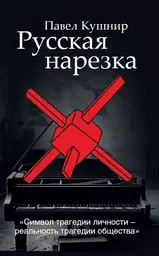
In 2024, the Russian pianist, author, and anti-war activist Pavel Kushnir died in detention after a hunger strike. While he remained almost unknown as a writer during his lifetime, his tragic death prompted critical recognition and publication of his literary works. For The Tamizdat Review, Maria Malinovskaya examines Kushnir’s best-known work, the novel Russian Cut-Up, showing how diaries, news fragments, and borrowed literary voices become a radical experiment in writing against war.
Pavel Kushnir is a paradoxical figure in contemporary Russian literature. Born in Tambov in 1984, raised in a musical family, and trained at the Moscow Conservatory, he worked as a pianist in provincial philharmonic halls and, in the final years of his life, as a soloist with the Birobidzhan Regional Philharmonic. He was also a tireless political activist and writer. Yet while his formally inventive anti-war texts, including Russian Cut-Up, the novel discussed here, could have lifted him high into the ranks of European experimental literature, during his short lifetime his work attracted remarkably little attention. Activism and writing, for Kushnir, were solitary practices—his condition was one of radical invisibility, and this is important to remember in analyzing his texts. The anti-war YouTube channel he started after the annexation of Crimea, plus the leaflets and hunger strikes he used to protest the full-scale invasion of Ukraine, had almost no audience, and his writing was only known to a small circle of readers.
That changed in 2024. Despite his extremely narrow reach, the government found Kushnir’s videos threatening enough to arrest him on charges of publicly inciting terrorism, and his subsequent death in a pre-trial detention center in Birobidzhan reversed his outsider status. When Kushnir became the first political prisoner in modern Russia to die of a hunger strike, there blossomed an intense interest in his work, and his previously obscure or unpublished texts were brought into circulation. Because of this, most readers of Russian Cut-Up, as well as of his large-scale experimental novels Noël and Birobidzhan Diary, written in 2022 but published in 2025, discovered Kushnir’s work posthumously.
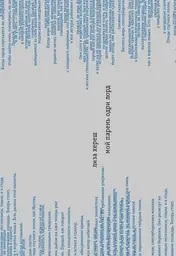
Russian Cut-Up was first published in 2014 by the Düsseldorf-based ZA-ZA publisher. In his preface to the novel, the author notes that the text consists of six parts: an introduction, two diary sections, a segment written from the perspective of Margarita from Faust, a section of “phantasms,” and a final collage composed of fourteen novels about the Great Patriotic War alongside material on Anne Frank. In this way, Kushnir brought together a number of familiar literary forms, and he did so in a profoundly new, radical way. The diary sections and the recurrence of recognizably biographical material invite comparisons with contemporary autobiographical writing, or, more precisely, autofiction; the incorporation or simulation of news, apparently transcribed speech, and historical materials raises the question of documentary writing; and the final collage makes avant-garde cut-up the formal operation through which these modes are segmented and recombined.
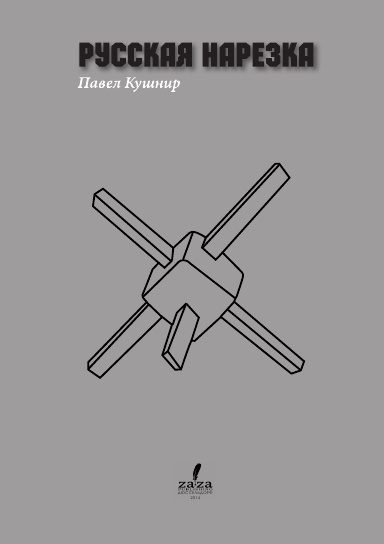
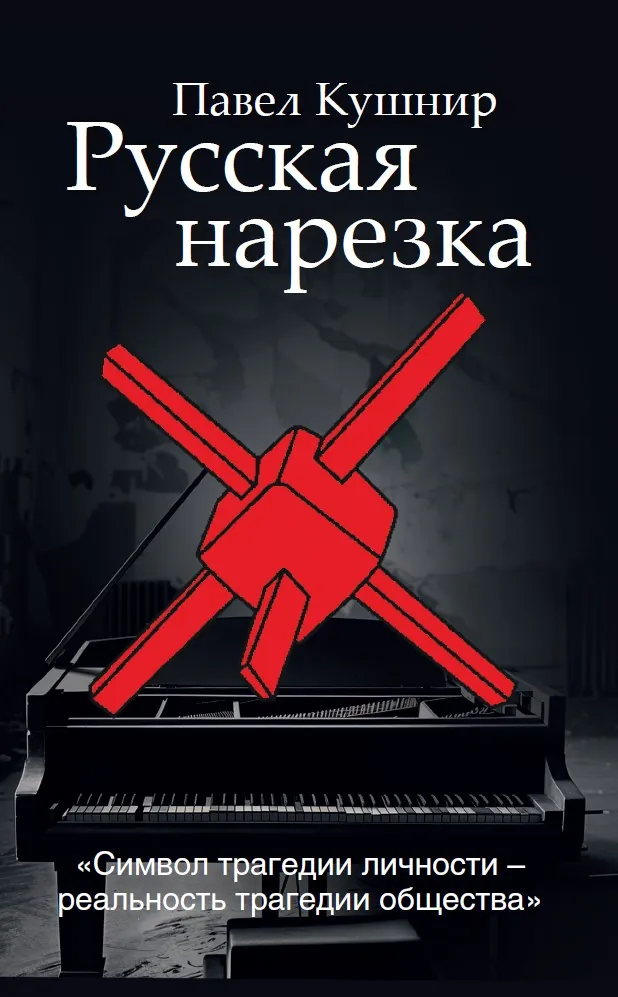
The cut-up method is most often associated with Tristan Tzara, Brion Gysin, and William Burroughs. But in Kushnir’s work, it also acquires a historical dimension. He interweaves existing texts—including Soviet prose about World War II—with autobiographical fragments, media language, and the discursive traces of 2014, the year of Russia’s annexation of Crimea. The resulting text superimposes the earlier war on the present one, rather than allowing either war to simply stand in for the other. The central question thus becomes: what happens when Kushnir moves among various recognizable modes of writing, exposes their reproducibility, and pushes each of them to a breaking point?
Crucially, the subject who emerges from this writing cannot be reduced to the figure of a victim. The voice constitutes a deliberate act and a mode of existence shaped through speech. It moves with such speed and density that it permits no pause. A pause would amount to silence, and silence, in turn, to complicity.
Война — прежде всего подлость. Всё дело в том, с чем ты поддерживаешь постоянную связь. Бесы среди На’ви так же редки, как среди дельфинов... Руддсцкой — другое дело. Там были использованы совсем другие вещи. Тематизм обезьяны... И не одной, многих ужасных трансгенных перенаселённых полифоническими паразитами постобезьян... Смесь коаты с шимпанзе, разбавленная аккордами мандрила... Бешеный диссонанс.
War is, above all, baseness. Everything depends on what you remain in constant contact with. Demons among the Na’vi are as rare as among dolphins… Ruddsckoy—that’s another story altogether. Quite different elements were used there. The ape’s thematic material… And not just one, but many—terrible transgenic post-apes, overpopulated with polyphonic parasites… A mixture of coati and chimpanzee, diluted with mandrill chords… A wild dissonance.
At first glance, the opening statement appears strikingly direct, even aphoristic, offering an unequivocal moral judgment on war. Almost immediately, however, this clarity gives way to a dense, hybrid semiotic field. The reference to the Na’vi—the fictional Indigenous inhabitants of Pandora in James Cameron’s Avatar—relocates the passage into a commercially produced, technologically mediated science-fiction universe. The comparison with dolphins extends this movement across cultural and biological registers, without supplying a stable allegorical key. Against this backdrop, the abrupt turn to “Ruddsckoy” (a distorted name that may reference the politician Alexander Rutskoy) initiates a cascade of increasingly dissonant images. Crucially, Kushnir’s use of “thematic material” (tematizm) imports a specifically musical logic into the prose. Unfolding here is not merely a sequence of metaphors, but a compositional process in which motifs are varied and constantly recombined. The “ape’s thematic material” functions as a generative principle, proliferating into “transgenic post-apes” and “polyphonic parasites,” where biological, technological, and musical vocabularies collapse into one another. This produces a form of semantic polyphony in which meaning operates on several layers at once. The final phrase, “a wild dissonance,” thus functions as a structural description of the passage itself: a deliberately constructed clash of codes and associations.
In this way, Kushnir transforms evaluative language into a compositional principle. The initial moral claim about war is neither retracted nor softened, but rather displaced into a system where its meaning emerges through juxtaposition and resonance. The reader is compelled to navigate among references to cinema, music, and biology, interpret shifting tonalities, and reconstruct meaning from fragmentation. What appears to be a direct accusation is, in fact, inseparable from a complex aesthetic procedure—one that refuses to stabilize meaning, instead staging it as an ongoing process of decoding.
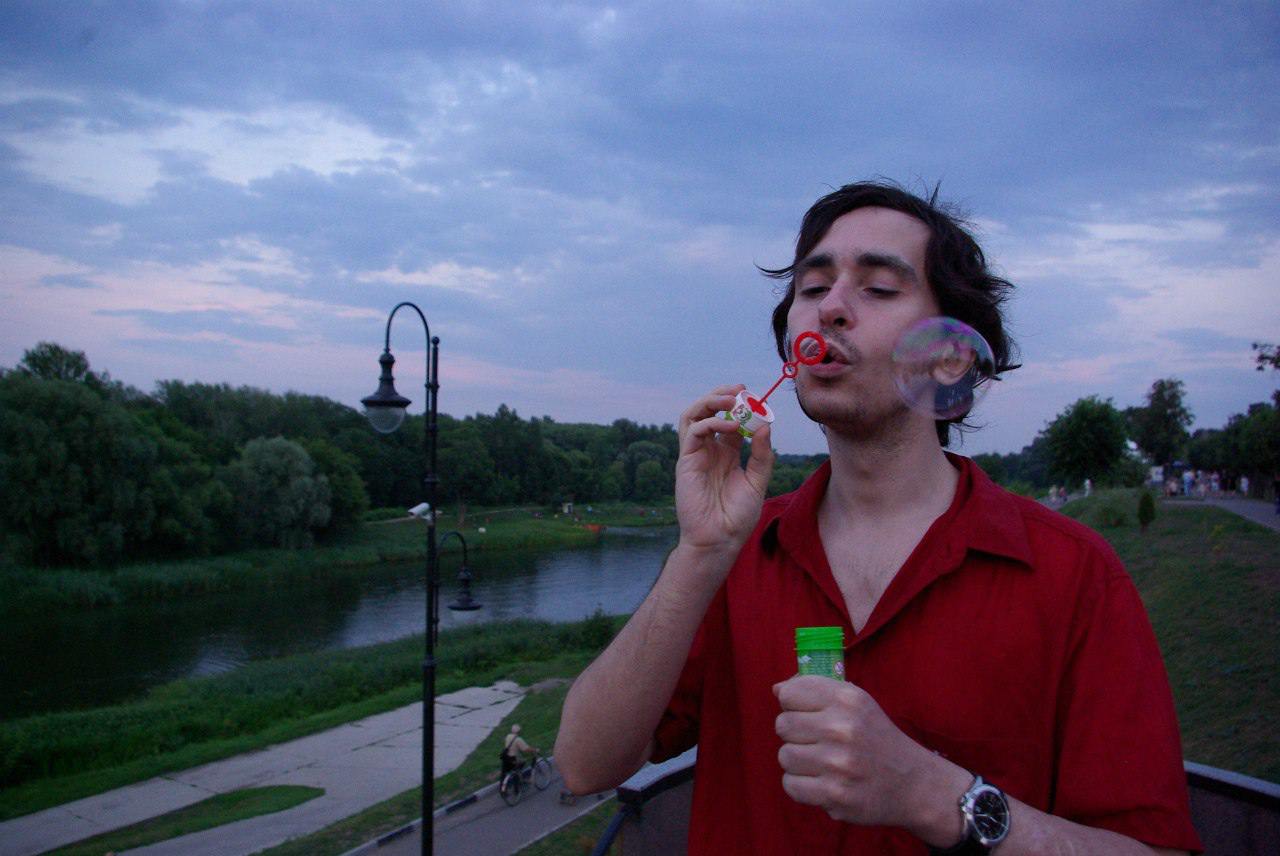
Initially, Russian Cut-Up might invite comparisons with such recent works of experimental Russophone prose as Igor Gulin’s Three Novellas (2024) and Ilya Danishevsky’s Damocles’ Techno (2025), in which personal experience, informational noise, and the muted presence of war merge into a fractured sonic texture. Such comparisons hold at the level of present-day reception: although Kushnir’s novel was published a decade earlier, the three books now enter the reader’s horizon together. This should not, however, be mistaken for evidence of a shared institutional or genealogical position. Kushnir wrote from outside visible literary institutions and networks, and he didn’t address his work to a professional literary community since he didn’t belong to one. He was virtually unknown, and his artistic development took place mostly within a musical environment: he wrote while at the Tambov music school, the Moscow Conservatory, and later in provincial philharmonic communities. Russian Cut-Up thus emerges not as a product of a literary circle, but as an almost auxiliary, private, and seemingly internally necessary mode of artistic existence. It can also be understood as a form of deliberate evasion—a refusal to settle within any single register or placeThe motif of “evasion” (uskol’zanie) may be related to the Joycean formula “silence, exile, and cunning,” articulated in A Portrait of the Artist as a Young Man. Unlike Joyce’s formula, which describes the artist’s strategy under conditions of national and cultural pressure, Kushnir’s “evasion” takes on a more radical character: It’s not only an aesthetic position, but also an existential and political practice—a rejection of fixity, stable social ties, and participation in any institutional forms. See Shavlovsky..
Gulin and Danishevsky address the reader from within the same circle to which the reader themselves belongs. They often playfully engage this reader, planting both encoded and explicit messages throughout their texts. Their writing not only presupposes a response from the addressee, but also actively provokes one, at times even addressing specific individuals who might be reading along. Kushnir, by contrast, has nothing of this sort at his disposal. He is left only with the possibility of doing something similar—playing with someone else’s toys before an unknown spectator, demonstrating, first, that they’re toys, and second, that they’re not his. In this sense, the narrator resembles a detached child, not fully immersed in his own game. Yet precisely because of this distance, what appears real to children fully absorbed in shared play becomes, for him, merely a game, a practice, a cut-up. He never becomes so engrossed as to lose himself in it. More often, he plays out of defiance, exposing the artificiality of the game and its imitative nature.
At the same time, Russian Cut-Up isn’t quite a novel in the conventional sense: rather, it is a montage of autobiographical fragments, diary entries, other people’s voices, phantasms, and literary borrowings. In my opinion, what matters most for Kushnir—certainly far more than any particular practice, be it autofiction, documentary writing, or visionary stream-of-consciousness prose—is the very switching of discursive gears. In Russian Cut-Up, he lays bare the mechanisms of these practices rather than simply put them to use. The author seems to say, I can do this, too, and this can easily be reproduced, only to then stitch everything he’s imitated and repeated into a single fabric in which, perhaps, it is the seams themselves that matter most.
In deconstructivist fashion, exposed seams, raw edges, and asymmetrical construction make the garment’s structure visible rather than concealing it.1 The same is true here. Even the phrase “Russian cut-up” carries a double valence whose meaning is apparent in Russian—Russkaya narezka—but not in English: narezka can refer both to a compilation of disparate materials and to an assortment of sliced food, particularly cold cuts, commonly served as part of a Russian festive table. Perhaps Kushnir’s only addressee is culture itself, served cold, appraised through distant reading without almost any networking engagement: a culture he challenges and engages in dialogue through its own forms. Unlike his peers, he always plays alone. This is both mesmerizing and sad. And at the same time, someone else’s toys are, for Kushnir, not limited to literary techniques. Judging by the available evidence, he had an extraordinarily dense cultural memory: music, cinema, photography, and poetry were not separate domains for him. This is why Russian Cut-Up is organized as a space in which different artistic languages constantly intrude upon one another:
С вокзала выхожу всегда с подъезда налево и в переход витрины ларьков энергетик день впереди длинный если редко их пьёшь то первые несколько часов настроение действительно чуть улучшается. Как раз успеваешь доехать до Тверской, пройти бульвар, потом Большую Никитскую, пошляться вокруг Кремля, потом пешком до киноцентра чтобы ещё сожрать пару тостов с колбасой и сыром в «Крошкакартошка» и умыться в сортире киноцентра, ну и на фильм в без чего-нибудь девять утра. В этот раз я долго стоял у здания ТАСС и разглядывал подборку фотографий в витринах. Если встать лицом к торцу здания то вторая витрина слева освещала визит Обамы в Москву. Медведев смотрелся натянуто и тускло. Устал, испуган. Совсем загоняли...
I always leave the station, out of the entrance, turn left and into the underpass the shop windows kiosks an energy drink the day ahead is long if you don’t drink them often then for the first few hours your mood really does improve a little. Just enough time to get to TverskayaTverskaya Street is one of Moscow’s central thoroughfares, historically a major axis of urban, political, and commercial life, connecting the city center with Red Square., walk the boulevard, then Bolshaya NikitskayaBolshaya Nikitskaya Street is a historic street in central Moscow, home to cultural institutions including the Moscow Conservatory. It’s associated with artistic and intellectual life., drift around the Kremlin, then on foot to the cinema center to grab a couple of sausage-and-cheese toasts at KroshkakartoshkaKroshka Kartoshka (lit. “Baby Tater”) is a popular Russian fast-food chain specializing in baked potatoes with various fillings, emblematic of inexpensive, everyday urban eating. and wash up in the cinema restroom, and then to the film at nine a.m., without anything extra. This time I stood for a long while by the TASS buildingTASS building is headquarters of the Russian state news agency (Telegraph Agency of the Soviet Union—now Russian News Agency TASS), often featuring large public display windows with official photographic materials., looking at the selection of photographs in the display windows. If you stand facing the side of the building, the second window on the left was lit with images from Obama’s visit to Moscow. MedvedevDmitry Medvedev was president of Russia (2008–2012) and later prime minister (2012–2020). He’s widely regarded as a formally independent yet politically subordinate figure within Putin’s power structure.
looked strained and dim. Tired, frightened. Completely worn down…
This passage, like many others of a similar kind, produces a strong sense of déjà vu. We’ve heard all this before—even in similar combinations. What exactly? First, the seeming nonchalance of the writing. Second, the simulation of direct address to an interlocutor who is assumed to share the narrator’s frame of reference. Places, institutions, and people enter the text without introduction or explanation: metro stations, shops, buildings, acquaintances identified only by their first or last names. Kushnir makes no effort to orient a reader who does not already know them. Third, the narrator dwells on naturalistic details of his own life or lives of others, employing a low-colloquial register (“to wolf down a couple of sausage-and-cheese toasts at Kroshkakartoshka and freshen up in the cinema restroom”). Or take another example: «Вчера играл концерт Рахманинова с оркестром. Дирижировал Сцукочёвбдт. После чего я нажрался посмотрел “Апокалипсис сегодня” прожёг сигаретой простыню нассал в ведро и заснул» (“Yesterday I played a Rachmaninoff concerto with an orchestra. Conducted by Stsukochevbdt. After that I got wasted watched Apocalypse Now burned a hole in the sheet with a cigarette pissed in a bucket and fell asleep”).
Such techniques look strikingly close to those of the French writers Kushnir appears to have admired, such as Jean Genet, Hervé Guibert, and Tony Duvert. Someone on social media offered a characterization of Kushnir that stayed with me: “He was an attentive reader of Mitin ZhurnalMitin Zhurnal is an experimental Russian literary journal founded in 1985 and initially circulated as tamizdat. Edited by Dmitry Volchek, it has, since the 1980s, served as an important Russian-language venue for unofficial and experimental writing and for translations of experimental and transgressive Western literature..” And, I would add, of the Kolonna PublicationsKolonna Publications was founded in 1997 and merged with Mitin Zhurnal in 2002. Together, the journal and press formed a distinctive Russian-language publishing context for experimental and transgressive European prose. website as well. In Russian, he reproduced the discursive strategies of French rebels and provocateurs. For instance, a description of one of Duvert’s books on the Kolonna website reads: “He blew up syntax and gave voice to the ‘banished’—outcasts who previously had no right to speak. The novel’s characters are creatures of the night, searching for love beneath Parisian bridges and along the boulevards.” Replace the Parisian bridges with ones from Moscow and is this not Kushnir? Those close to him often pointed to his punk lifestyle: a refusal of institutional normality, principled unsettledness, readiness to exist outside social and professional expectations.2 In this sense, his novel continues the same stance: speech, like life, does not strive for stability, but sustains itself in a state of tense freedom. Yet Kushnir goes further than his predecessors, undermining autofiction from within, and veering into a carnivalesque phantasmagoria:
Директор вызывает и с победоносным видом (поймал вора на месте преступления) тычет мне в рожу афишей моего сольного концерта с криком «Это что такое!?» после чего я превращаюсь в кота, афиша в лужу мочи прямо у директора на столе, он тычет меня мордой в лужу приговаривая «Не играй сольных концертов, не играй сольных концертов!!» а я выворачиваюсь, царапаюсь и ору «Мяу!! Мяу!!»...
The director summons me and, with a triumphant look (like he’s caught a thief in the act), shoves the poster for my solo concert in my face, shouting, “What is this?!”—after which I turn into a cat, the poster into a puddle of piss right on the director’s desk, he rubs my face in it, repeating, “Don’t play solo concerts, don’t play solo concerts!!” and I twist away, scratching, and scream, “Meow!! Meow!!”…
Kushnir consistently undermines and ultimately mocks diary-like narration that dwells on and savors detail (even if we assume that the episode with the cat is nothing more than an imaginative projection of the narrator, made at the very scene of events). At the same time, Kushnir’s interest in writing went back to his youth: back then, experimenting with fictional prose, he was quick to register details and impressions, and to transform them into verbal flow. This is precisely why, for all its deliberate imitativeness, the biographical surface of Russian Cut-Up does not feel mechanically borrowed. It is too alive, too charged with nervous energy, to be reduced to a mere gesture of imitation.
The same applies to documentary writing. It is an important feature of Russian Cut-Up, though not the defining one. The novel often creates the impression that it records actual documents or the speech of real people, yet its larger structure is primarily intertextual. Shifts in style, intonation, and syntax mark a transition from authorial discourse to the voices of others—as if those voices had been overheard or picked up from the air. At times, they resemble fragments of news reports or reproduce the hesitations, repetitions, and broken syntax of spoken language. Yet the text gives us no way of knowing whether these voices were actually recorded, or if they’ve been deliberately invented and stylized by Kushnir. What matters, therefore, is how easily the effect of documentary authenticity can be reproduced through recognizable formal devices:
Однажды ехал в Тамбове в троллейбусе домой к Лиле. Троллейбус наполовину полон или пуст. Сегодня резко обострились газовые отношения между Россией и Украиной. Рядом со мной стоял мужик лет сорока пяти. Он стоял близко, потом придвинулся ближе, ещё ближе ещё. Его пах к моему бедру. Он был в пыльно-синих шортах. Его член медленно встал, но до конца выпрямиться не мог из-за ткани, так и торчал вниз и вбок. Ждал что будет дальше. Ткнулся членом мне в бедро, прижался совсем близко, весь напрягся, так и стоял, отвернув сухое, загорелое, морщинистое лицо, глядя в сторону, наполовину закрыв глаза. На съезде кинематографистов разгорелся грандиозный скандал. Я смотрел ему в лицо но так и не встретил его взгляда. Лицо его выворачивалось вправо, а хуй торчал налево; он не делал никаких движений и казалось даже дышать перестал. Троллейбус всё более освобождался от людей. Давки уже несколько остановок как не было. Вокруг стояли люди, которым было видно липнущего ко мне чувака и его ноющий член, им это было интересно, противно и безразлично. Один стоял прямо напротив и смотрел на нас. Подарить ему мимолётную радость в троллейбусе. Если моё тело можно так желать что не бояться теперь уже в почти пустом... Ему одиноко? Что чувствует? Молится чтобы никогда не доехали? Проехал уже свою остановку? Я вышел за одну остановку до нужной мне — на прощание похлопал его по плечу. Думаю, достаточно его утешил. Страшно вдруг вышел вслед за мной — нет, не вышел, поехал дальше, а я пошёл спокойно к Лиле. И пока шёл, привычные мысли вытеснили эпизод с педиком. Мне было лет пятнадцать или шестнадцать. Смотрите, какие глаза, говорит хоккейный комментатор, прожигают маску изнутри. Мы отыграли одну шайбу, теперь ничья. Жан Жене пишет: «...он боялся, что однажды кот всё-таки выйдет наружу, унося в себе часть его плоти. Он застыл, уставившись в ночь, сжимая автомат» [курсив мой. — M. M.]
Once I was riding a trolleybus in Tambov, on my way to Lilya’s. Half full, half empty. Today, gas relations between Russia and Ukraine sharply escalated. A man of about forty-five stood next to me. He stood close, then moved closer, closer still. His crotch against my thigh. He was wearing dusty blue shorts. His dick slowly hardened, but could not fully straighten because of the fabric, and remained sticking down and sideways. Waiting to see what would happen next. He pressed his dick against my thigh, moved right up against me, his whole body tense, and just stood there, turned away—his dry, tanned, wrinkled face looking to the side, his eyes half closed. At the Congress of Cinematographers, a major scandal had broken out. I looked at his face but never met his gaze. His face twisted to the right, while his dick pointed to the left; he made no movement and seemed even to have stopped breathing. The trolleybus kept emptying. There had been no crowd for several stops. People stood around us, able to see the guy pressing himself against me and his aching dick; they were interested, disgusted, indifferent. One man stood directly opposite and watched us. To give him a fleeting pleasure on a trolleybus. If my body can be desired like this, so much that there is no fear, now, in an almost empty… Is he lonely? What does he feel? Is he praying that we never arrive? Has he already passed his stop? I got off one stop before the one I needed—on the way out, I patted him on the shoulder. I think I comforted him enough. I was afraid he might suddenly get off after me—no, he didn’t, he kept going, and I walked calmly to Lilya’s. And as I walked, my usual thoughts pushed the episode with the faggot out of my mind. I was fifteen or sixteen. “Look at those eyes,” the hockey commentator says, “burning through the mask from within. We got one goal back; now it’s tied.” Jean Genet writes: “... he feared that one day the cat would finally come out, carrying with it a part of his flesh. He froze, staring into the night, gripping his rifle.” [emphasis mine. — M. M.]
This episode is interrupted by several distinct forms of borrowed discourse: political headlines, sports commentary, and an explicitly marked literary quotation. The quotation from Genet, however, follows a distinct intertextual logicThe quotation is from Jean Genet’s wartime novel Funeral Rites (Pompes funèbres), in Georgy Zinger’s Russian translation (Tekst, 2001). In Genet’s novel, Riton, a young member of the collaborationist Milice during the German occupation, has killed and eaten a cat. He later fears that the animal remains alive inside him and may emerge, taking part of his flesh with it. Immediately after the quoted passage, Kushnir writes: “I read it today; I already knew it yesterday… Riton ate the cat,” transforming citation into a moment of recognition. This image in Kushnir’s text also echoes the earlier episode where the narrator himself turns into a cat. Genet’s fantasy of bodily incorporation is thus grafted onto Kushnir’s autobiographical memory of bodily contact.. The media fragments, whether taken from actual sources or simulated by the author, serve several functions. First, they give the reader a sense of immediacy. Although the surrounding narrative recounts a past event, the media fragments enter it without retrospective framing; there’s no indication that the narrator read the news on his phone, heard it in his head, or overheard it from another passenger’s device. They simply appear within the remembered scene, as if the reader were hearing them together with the narrator. Second, these insertions repeatedly interrupt the narrator’s own speech. A stray fragment of newsfeed or commentary breaks the narrative flow and undercuts its pathos whenever it begins to build up. Such self-interruption runs throughout Russian Cut-Up. It creates the semblance of a conversation, although the conversation ultimately takes place within a single consciousness. This conversation unfolds against the background of culture—and the background becomes a wall off which the author’s ball rebounds. Third, the informational background becomes one of the principal forces in Russian Cut-Up. It has a sound of its own, and at times that sound suppresses everything else and takes over the narrative.
This happens, for example, in the second section, which takes the form of a diary:
Ополченцы готовятся отразить нападение боевиков «Правого сектора»... Штаб народной самообороны... Встали на пути карательной операции... Славянск полностью блокирован украинскими войсками... Сторонники федерализации стараются как можно меньше показывать лица. В Одессе сорок человек сгорели заживо. Бандеровцы загнали наших активистов в дом профсоюзов и подожгли.
Militias are preparing to repel an attack by Right Sector combatants… Headquarters of the People’s Self-Defense Forces… They have taken a stand in the path of a punitive operation… Slaviansk is completely blockaded by Ukrainian troops… Supporters of federalization are trying to show their faces as little as possible. In Odesa, forty people burned alive. Banderites drove our activists into the Trade Unions House and set it on fire.
In this section of the book, the informational background turns into a hum; fragments of narrative structure occasionally surface from it as if from a body of water, only to disappear again almost immediately. What matters is that the novel didn’t emerge after the war, but amid the unfolding catastrophe, and its diary section registers the escalation of 2014 from within. For this reason, the atmosphere of informational pressure doesn’t appear as a retrospective commentary, but as the very medium of writing. Kushnir reproduces what circulates around him, what blares from television screens. He mixes the voices of victims and aggressors with propaganda from both sides—the dense tangle is life itself. He presents this tangle as life, only for life to recoil from the intensity of its own reflection:
Наконец дали холодную воду, смыли все сортиры, развешали бельё и набухались... Люся вышла замуж, узнал от Вики сегодня, не знаю, за кого... Хотя бы за вроде твоего... Три соседки были не разлей вода прошло два года уже не общается никто ни с кем... Слегка подправить и так уже полное достоинства лицо... Вчёс — выхрюгнувшийся порклоп подвышенных вожей… [курсив мой. — M. M.]
Finally the cold water came back, we flushed all the toilets, hung out the laundry, and got drunk… Lyusya got married—I found out from Vika today, don’t know to whom… At least to someone kind of like yours… Three neighbors were once inseparable—two years have passed and now none of them speaks to each other… A face already full of dignity, just slightly adjusted… A forelock—some snort-blurted porklop of upraised reinfolk... [emphasis mine. — M. M.]
The voices drown one another out until they become indistinguishable and speech chokes on itself, turning into incoherent muttering, as in the final sentence where language slips into near-Zaum. “A forelock—some snort-blurted porklop of upraised reinfolk…” is a cluster of invented and hybridized words that combine their sonic excess with fractured semantic echoes (of leaders, reins, elevation), producing not nonsense as such, but a distorted, overdriven language that can no longer stabilize meaning. And once again, Kushnir mimics himself—the self who writes as if from within yet another practice, this time documentary. He drives autofiction into phantasmagoria, and documentary writing into inarticulacy. This tendency to push each gesture to its limit seems rooted both in the inner poetic logic of the text and in Kushnir’s broader disposition. Those who knew him recall that he refused to compromise and sought to take everything as far as it would go.3
The speech of certain characters takes the form of pseudo-verbatim transcription, as if Kushnir had recorded their speech and then transcribed it. Or, it’s as if he were reconstructing someone else’s flow of speech from memory, but with an auditory memory so precise that it doesn’t impose coherence or articulateness on what it captures, preserving instead pure intonation. Perhaps this is indeed the case—Kushnir, after all, was a musician. But what’s presented to the reader, once again, is a stripped-down mechanism, akin to the faceless heads used in art schools to teach beginning artists the muscular structure of the face:
«Я ненавижу своих друзей. Они все слабаки, слизняки. Вот посмотри. Здесь я а это Саша и Миша. Миша. Каким же он стал слизняком. Они все приезжают. Живут на родительские деньги. И с понтом ищут работу. Эта им не подходит. Эта не устраивает. Здесь мало платят, эта неинтересная, тут не прижился. Сначала был институт, все учились, потом началось, боулинг, бухло, и так пробухали год, другой, до сих пор ничего, так и бухают».
«Он даже был лучшим на курсе, но ни хрена ничего не знает, он просто совсем не шарит в собственной профессии, просто у него собачьи глаза, и он смотрел на профессоров собачьими глазами, а они женщины все, ставили зачёты, отличные оценки. Работу ищет уже вечность наверное. Я, мол, хочу получать—некрасивое круглое число—не меньше».
“I hate my friends. They’re all weaklings, slugs. Just look. Here’s me, and this is Sasha, and Misha. Misha. What a slug he’s become. They all come here. Live off their parents’ money. And pretend they’re looking for a job. This one doesn’t suit them. That one doesn’t work. Here they don’t pay enough, that one’s not interesting, couldn’t settle there. First there was the institute, everyone studied, then it started—bowling, booze—and they drank a year away, another, still nothing, still drinking.”
“He was even top of the class, but he doesn’t know a damn thing, he just doesn’t understand his own profession at all, it’s just that he’s got these puppy eyes, and he looked at the professors with those puppy eyes, and they’re all women, so they gave him passes, top grades. He’s been looking for a job forever, probably. Me, I want to earn—an ugly round number—no less.”
In this paragraph, quotation marks indicate someone else’s speech, but this conventional marker alone provides no grounds for treating the fragment as documentary.
The same applies to the dreamlike narrative of war:
Кругом резали, душили, насиловали, поднимаются одни, спускаются другие, руки в тисках, рты забиты косынками, ноги раздвинуты—они уже не пытаются вырваться из рук четырёх сержантов, предупреждавших жителей по поводу жестокости следовавших частей, и вновь и вновь находились советские офицеры и солдаты, помогавшие женщинам и детям, бегущим в панике людям. Женщины со щетками и бельем в руках с песнями спускаются к реке; те из них, кого этой ночью изнасиловали солдаты, не осмеливаются смотреть в воду; дети, разрезая до крови голые спины и плечи, взбираются на деревья. Лучи солнца, острые, как иглы шприцев, протыкают виски и спины солдат, наполняя их ненавистью и желанием. Солдаты вздрагивают, незаметно для себя засыпают.
All around, they were cutting, strangling, raping; some rising, others descending; hands clamped in vices, mouths stuffed with kerchiefs, legs forced apart—they no longer try to break free from the grip of four sergeants who had warned the residents about the brutality of the advancing units, and again and again there were Soviet officers and soldiers who helped women and children, people fleeing in panic. Women, with brushes and laundry in their hands, walk down to the river singing; those among them who were raped that night do not dare look into the water; children, tearing the bare skin of their backs and shoulders to blood, climb trees. The rays of the sun, sharp as hypodermic needles, pierce the temples and backs of the soldiers, filling them with hatred and desire. The soldiers shudder, and, without noticing it themselves, fall asleep.
One might ask whether the reader noticed anything strange in the paragraph just cited. In fact, only half the text I have quoted belongs to Kushnir. The other half, beginning with the words “Women, with brushes…,” belongs to Pierre Guyotat; it is an excerpt from his celebrated novel, Tomb for Five Hundred Thousand Soldiers.4 While reading Kushnir, I couldn’t shake the feeling that, within the polyphony of his narrative, some passages were modeled on Guyotat’s prose, adjusting themselves to his voice and echoing it from within the realities of the twenty-first century. I found this difficult to accept. Why speak, for example, about Donbas in someone else’s voice, even if so masterfully imitated? Perhaps Kushnir was exploring the idea of interchangeability. If he can speak about the present in Guyotat’s voice, then perhaps Guyotat, too, when writing about Algeria in the twentieth century, was not speaking in his own voice, but in some autonomous voice that belonged to no one. Indeed, the most outstanding works are often written in a voice that’s not one’s own. And Kushnir’s own voice—both in its individuality and in the way it drew on several traditions at once—went largely unrecognized. With no established circle of readers or interlocutors able to identify it, he seems to undertake a kind of literary self-analysis in real time. Even here, however, he remains faithful to his method of interruption, breaking into this borrowed voice with another one, stylistically and graphically more alien still:
окровавленные рты и сержанты тащат их изуродованные тела в свина...
— я не желаю слушать это, я хочу, чтобы вы
рник и голодные свиньи начинают отрывать у них уши носы груди через несколь танкисты врываются в храм из души поэта подавшегося вперёд и не сводившего с неё горящих глаз исторглось полное два черепа и позвонки предостерегли против вольностей в отношении населения...
Bloodied mouths and the sergeants drag their mutilated bodies into the swi—
— I do not wish to hear this, I want you to
nary and starving pigs begin tearing off their ears noses breasts through sever— tank crews burst into the temple from the soul of the poet leaning forward and not taking his burning eyes off her there erupted a complete two skulls and vertebrae warned against liberties in relation to the population…
“— I do not wish to hear this, I want you to—”: is this the reader’s voice, Kushnir’s voice as a reader of Guyotat, or the voice of a stereotypical Guyotat reader? The text leaves the question unresolved, momentarily breaking the flow of speech and making it unclear whether the previous narrative layer has resumed. To which level of reality does this voice belong? Does it negate something within the narrative, or negate the narrative itself? There’s no single correct answer to these questions. The same is true of the text as a whole: a multidirectional discourse that conflicts with itself and generates meaning through those conflicts. The text oscillates between plagiarism and reminiscence, between imitative apprenticeship and the construction, through writing itself, of its own theory of how writing should work. It moves among several recognizable practices without settling fully into any one of them and without presuming that it will be adequately read. It is as if this were a text addressed to its predecessors rather than to its interpreters—and in this lies its freedom from its own time.
Bibliography & filmography
Ilya Danishevksy. Дамоклово техно [Ilya Danishevksy. Damocles’ Techno]. Freedom Letters, 2025.
Elizaveta Focht. «Этот винтик не подходил никакой машине». Кем был Павел Кушнир — пианист, который умер в СИЗО от голодовки против войны [ “‘This Cog Did Not Fit Any Machine’: Who Was Pavel Kushnir—the Pianist Who Died in Pretrial Detention from a Hunger Strike Against the War”]. BBC News Русская служба, August 7, 2024.
Jean Genet. Торжество похорон [Funeral Rites]. Translated by Georgy Zinger, Tekst, 2001.
Igor Gulin. Три повести: Юля Ким. Запрет на обгон. Ощипанные глаза [Three Novellas: Yulia Kim. No Passing. Plucked Eyes]. Jaromir Hladík Press, 2024.
Pierre Guyotat. Могила для пятисот тысяч солдат [Tomb for Five Hundred Thousand Soldiers]. Kolonna Publications, 2004.
Konstantin Shavlovsky. “Одиночество как поступок. Большое интервью Константина Шавловского с Сергеем Ерженковым” [“Loneliness as an Act: A Long Interview by Konstantin Shavlovsky with Sergei Yerzhenkov”]. Republic, January 31, 2026.
Ekaterina Vasilieva. “Деконструкция и мода: порядок и беспорядок” [“Deconstruction and Fashion: Order and Disorder”]. New Literary Observer. Теория моды, no. 50, 2018.
Sergey Yerzhenkov. “Неизвестная история Павла Кушнира | Док. фильм ‘Кушнир’” [“The Unknown Story of Pavel Kushnir | Doc. Film ‘Kushnir’”]. YouTube, uploaded by Votvot.
-
 Maria Malinovskaya
A Belarusian poet, translator, and scholar born in Gomel. She is the author of the poetry collections Kaimaniya (2020), Dvizhenie skrytykh kolonii [The Movement of Hidden Colonies] (2020), and Liniia begstva [Line of Escape] (2024). She is also the founder of the multilingual poetry magazine RADAR. Malinovskaya's poetry has been translated into English, Italian, Spanish, Latvian, Lithuanian, Ukrainian, Polish, and Swedish. She graduated from the Maxim Gorky Literature Institute, holds an MA in Literary Theory from the Russian State University for the Humanities, and is a PhD candidate in Slavic Languages and Literatures at Stanford University. Her research interests include documentary poetry, the visual culture of the 2020 Belarusian protests, queer theory, and the poetics of travel in the Russian Silver Age. In 2021, she received the Poezia Prize for “white-red-white flag.”
Sources
- 1 Ekaterina Vasilieva. “Деконструкция и мода: порядок и беспорядок” [“Deconstruction and Fashion: Order and Disorder”]. New Literary Observer. Теория моды, no. 50, 2018.
- 2 See Sergey Yerzhenkov's documentary Kushnir.
- 3 Elizaveta Focht. «Этот винтик не подходил никакой машине». Кем был Павел Кушнир — пианист, который умер в СИЗО от голодовки против войны [“‘This Cog Did Not Fit Any Machine’: Who Was Pavel Kushnir—the Pianist Who Died in Pretrial Detention from a Hunger Strike Against the War”]. BBC News Русская служба, August 7, 2024.
- 4 Пьер Гийота. Могила для пятисот тысяч солдат / пер. с фр. М. Иванова. Тверь: Kolonna Publications, 2004. С. 139.